
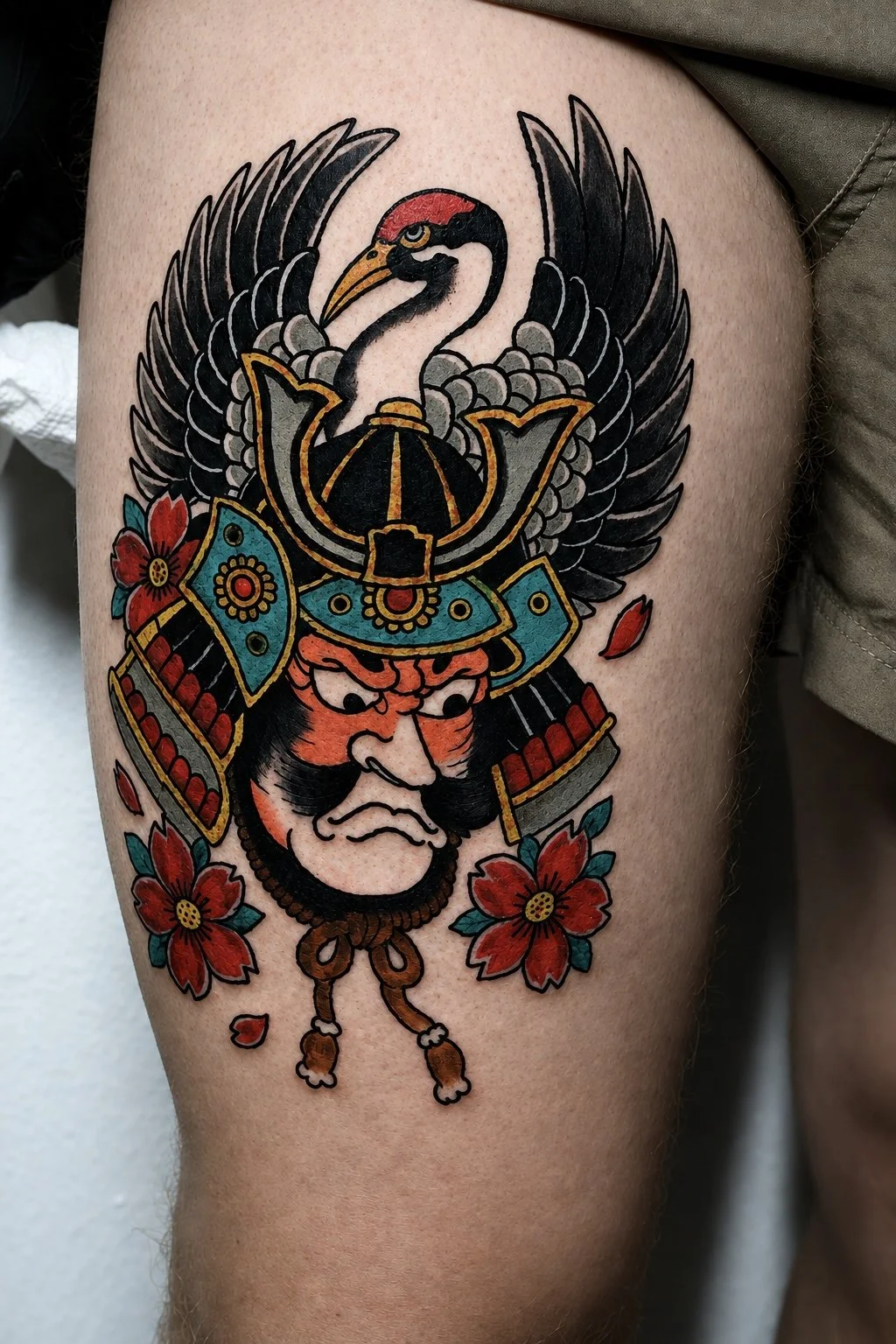
About Tattoos & Their Aftercare
Your tattoo
Protect Your Skin. Support Healing. Preserve Your Tattoo.
A new tattoo is both fresh artwork and freshly injured skin. Tattooing creates thousands of microscopic punctures that deposit pigment into the dermis, temporarily disrupting the skin’s protective barrier.
Appropriate aftercare protects the tattoo from contamination and friction while supporting the skin’s natural repair process. Although research has not established one universally superior tattoo product or healing method, the evidence generally supports a simple approach:
Keep the tattoo clean, protect it and maintain light, balanced moisture while it heals.
Most tattoos heal in stages:
Days 1–3: Redness, tenderness, swelling and light release of plasma, blood or pigment
Days 3–10: Dryness, itching, flaking and peeling
Weeks 2–4: Surface healing usually finishes
Weeks 4–6: Deeper skin recovery continues
Healing time varies depending on the tattoo’s size, saturation, placement, the amount of skin trauma and your individual health and skin characteristics.
Even when a tattoo looks healed on the surface, deeper repair may still be occurring.
The Golden Rules
Do:
Wash your hands before touching the tattoo.
Follow the instructions for the dressing or aftercare method used on you.
Clean the tattoo gently once the initial covering is discontinued.
Maintain light moisture without leaving the tattoo wet or greasy.
Wear clean, loose clothing over the area.
Use clean clothing, towels and bedding.
Keep pets, gym equipment and shared surfaces away from the tattoo.
Contact me if you have questions about the healing process.
Don’t:
Pick, scratch, scrub or peel the tattoo.
Apply thick layers of ointment, balm or lotion.
Rewrap the tattoo unless specifically instructed.
Combine different dressing methods or products without instructions.
Submerge the tattoo in pools, hot tubs, baths, lakes, rivers or ocean water while it is healing.
Expose a healing tattoo to direct sunlight or tanning beds.
Use fragranced, harsh or irritating skincare products.
Initial Aftercare Method
Depending on the tattoo, its placement, expected fluid release and your skin, I may use one of three initial aftercare methods:
Second-skin adhesive film
Film-forming sealant gel
Absorbent tattoo pads
Each method protects the tattoo differently. Follow the specific instructions you receive for the method used on you. Do not add another dressing, reapply a product or change methods unless instructed.
Second Skin
Second skin is a transparent, semi-permeable adhesive film. It protects the tattoo from friction and outside contamination while maintaining a controlled moist environment.
A collection of plasma, blood and pigment beneath an intact dressing can be normal during the initial healing period.
If second skin is applied:
Keep it on for the period I recommend.
Do not puncture, drain or intentionally peel it.
Remove it if the seal breaks, the tattoo becomes exposed or fluid leaks outside the dressing.
Remove it if you develop increasing burning, itching, blistering or an adhesive-shaped rash.
Remove it slowly under lukewarm water, pulling it back along the skin rather than straight upward.
After removal, begin traditional washing and light moisturization unless instructed otherwise.
Do not place a new adhesive film over irritated, contaminated or potentially infected skin.
Second skin is a reasonable and convenient aftercare option, but current research has not established that it produces better tattoo outcomes than carefully performed traditional aftercare.
Sealant Gel
Sealant gel is applied directly to the tattoo and dries into a flexible, temporary protective film. It may be useful for clients who are sensitive to adhesive sheets or for areas where second skin is difficult to apply.
If sealant gel is used:
Allow the product to dry completely.
Do not pick, scratch or deliberately peel the film.
Do not apply lotion, balm or ointment over the sealant unless instructed.
Do not place an adhesive dressing or plastic wrap over it.
Avoid soaking or prolonged water exposure.
Transition to gentle washing and light moisturization after the sealant releases or is removed as instructed.
Contact me if the film fails, traps excessive fluid or causes increasing irritation.
Film-forming tattoo gels have less clinical research than established medical dressings. They are a practical aftercare option, but they have not been proven superior to second skin or traditional healing.
Absorbent Tattoo Pads
Tattoo pads absorb plasma, blood and excess pigment while protecting the tattoo from clothing, friction and outside contamination. They can be particularly useful for large or heavily saturated tattoos that are expected to release more fluid.
If a tattoo pad is applied:
Keep it in place for the period I recommend.
Wash your hands before touching or removing it.
Remove it sooner if it becomes saturated, wet, dirty or displaced.
Never allow a heavily saturated pad to remain against the tattoo.
If it sticks, loosen it gently with lukewarm water instead of pulling forcefully.
Discard the pad after removal. Never reuse it.
Gently wash and dry the tattoo after the pad is removed.
Begin light moisturization as instructed.
Do not replace the pad or rewrap the tattoo unless I have specifically instructed you to do so.
Traditional Aftercare
Traditional aftercare begins when no protective covering is used or after your second skin, sealant gel or tattoo pad is discontinued.
-
Wash your hands thoroughly.
Gently wash the tattoo with lukewarm water and a mild, fragrance-free liquid cleanser.
Use clean fingertips only.
Do not scrub or use a washcloth, loofah, sponge or exfoliating tool.
Rinse the tattoo thoroughly.
Pat it dry with a clean disposable paper towel or allow it to air-dry briefly.
Clean the tattoo approximately once or twice daily unless I provide different instructions based on your tattoo.
Antimicrobial cleansers are commonly used in tattoo aftercare, but they have not been proven superior to gentle cleansing for uncomplicated tattoos. A mild antimicrobial cleanser may be used if recommended, but stronger or more frequent cleaning is not necessarily better.
-
Modern wound-care evidence generally supports controlled moisture rather than allowing injured skin to become excessively dry beneath a thick, cracking scab.
This does not mean keeping the tattoo wet or heavily coated. The goal is to prevent excessive dryness while avoiding trapped fluid, clogged follicles and skin maceration.
Appropriate moisture looks like:
The tattoo feels comfortable rather than tight or cracked.
The moisturizer is fully absorbed.
The skin looks hydrated but not glossy, sticky or wet.
How to moisturize:
Begin with a very small amount.
Spread it gently over the tattoo.
Rub it in completely without aggressive friction.
If the tattoo remains shiny or greasy, you applied too much.
Apply moisturizer when the skin feels dry or tight rather than continuously coating it.
More product does not produce faster healing.
-
Complete dry healing means using no moisturizer and allowing the tattoo to remain uncovered after the initial dressing is removed.
There is no strong tattoo-specific evidence showing that complete dry healing improves pigment retention, healing speed or infection prevention. It may also increase tightness, itching, cracking and heavy scabbing.
Dry healing may be necessary when someone cannot tolerate adhesives or topical products, but it is not my standard recommendation. Allowing a washed tattoo to air-dry briefly is different from using a complete dry-healing method.
-
During early healing, it can be normal to experience:
Mild to moderate localized redness
Tenderness
Mild warmth
Swelling
Clear, pink or lightly blood-tinged fluid
Small amounts of excess pigment in the drainage
Tightness or itching
Light flaking and peeling
These symptoms should generally improve rather than become progressively worse.
-
Seek prompt medical evaluation if you experience:
Redness that continues expanding
Pain, warmth or swelling that is increasing
Thick yellow or green drainage
Foul odor
Fever, chills or feeling ill
Red streaks extending from the tattoo
Rapidly developing blisters
A severe or spreading rash
Symptoms that improve and then worsen
Any concern that the tattoo may be infected
A tattoo artist cannot diagnose or treat an infection. Contact me so I am aware of the concern, but suspected infections should be evaluated by a qualified medical professional.
-
Once the tattoo is completely healed:
Moisturize as needed to maintain healthy skin.
Use a broad-spectrum sunscreen with SPF 30 or higher.
Reapply sunscreen according to its directions, especially during prolonged outdoor exposure.
Limit unnecessary ultraviolet exposure.
Sun protection is one of the most important long-term measures for protecting your skin and limiting tattoo fading. A specialized tattoo sunscreen is not required; an appropriate broad-spectrum sunscreen is sufficient.
Aftercare products & recommendations
-
Simplicity and skin compatibility matter more than branding.
For most clients, appropriate products include:
A mild, fragrance-free liquid cleanser
A simple fragrance-free lotion or cream
A fragrance-free moisturizer containing panthenol or dexpanthenol, if tolerated
Panthenol is one of the few ingredients studied directly on freshly tattooed human skin. Small studies suggest that it may support hydration, skin-barrier recovery and comfort. It has not been proven to prevent infection or outperform every ordinary fragrance-free moisturizer.
The Tattoo Goo Aftercare Kit is available as an optional and convenient system for clients who tolerate its ingredients. It is not required, and current research does not establish that Tattoo Goo or another tattoo-specific brand heals tattoos better than an appropriate fragrance-free cleanser and moisturizer.
If you already have a gentle, fragrance-free cleanser and moisturizer that work well with your skin, purchasing a specialty tattoo product may not be necessary.
-
Lightweight lotions and creams are generally easier to apply without leaving a tattoo excessively coated.
Balms and ointments may provide additional protection from dryness, but many contain fragrances, essential oils, botanical extracts, beeswax or lanolin. These ingredients are not automatically harmful, but they can cause irritation or allergic reactions in some people.
Petrolatum-based products are not automatically harmful to tattoos and are commonly used in general dermatologic wound care. However, they are highly occlusive and can be overapplied easily.
If an ointment is recommended:
Apply only a very thin layer.
Do not leave the tattoo visibly greasy.
Stop using it if you develop increasing itching, burning, bumps or a spreading rash.
Aquaphor contains additional ingredients, including lanolin alcohol, that may cause contact reactions in susceptible individuals. It is an option—not a requirement.
-
Avoid products that may irritate healing skin or interfere with normal recovery:
Fragranced lotions, soaps or body washes
Essential oils
Heavily botanical products
Alcohol or hydrogen peroxide
Exfoliating acids or scrubs
Retinoids and other active skincare ingredients
Thick ointment or balm buildup
Undiluted antiseptics
Topical antibiotics unless medically directed
Routine use of Neosporin, bacitracin or triple-antibiotic ointment is not recommended for an uncomplicated tattoo. These products have not been shown to improve routine tattoo healing and may cause contact dermatitis. Suspected infection should be evaluated by a qualified medical professional.
-
Until the tattoo is fully closed and no longer peeling, scabbing, draining or raw:
Do not swim or soak in water.
Avoid pools, hot tubs, baths, lakes, rivers and the ocean.
Avoid direct sunlight and tanning beds.
Do not apply sunscreen to open or actively peeling skin.
Avoid tight or abrasive clothing.
Minimize friction and unnecessary touching.
Avoid dirty surfaces and shared gym equipment.
Avoid activities that create substantial rubbing or stretching over the tattoo.
Do not shave or exfoliate the area.
Do not pick or remove peeling skin.
Showers are fine. Prolonged soaking is not.
Exercise may be resumed cautiously based on the tattoo’s placement and the activity involved. Avoid excessive sweating, friction and repeated stretching across the tattoo during early healing.
Final Thoughts
Research specifically examining tattoo aftercare remains limited. Existing evidence generally supports gentle cleansing, protection from contamination and friction, and controlled moisturization. It does not establish one universally superior commercial product, dressing or healing method.
I select between second skin, sealant gel and tattoo pads based on the individual tattoo, its placement, expected drainage and your skin. Regardless of the initial method used, the goal remains the same:
Keep the tattoo clean, protected and lightly moisturized without allowing it to become excessively dry, wet or greasy.
Every person heals differently. If you have questions during healing, contact Derek Ream Tattoos directly before changing products or aftercare methods.